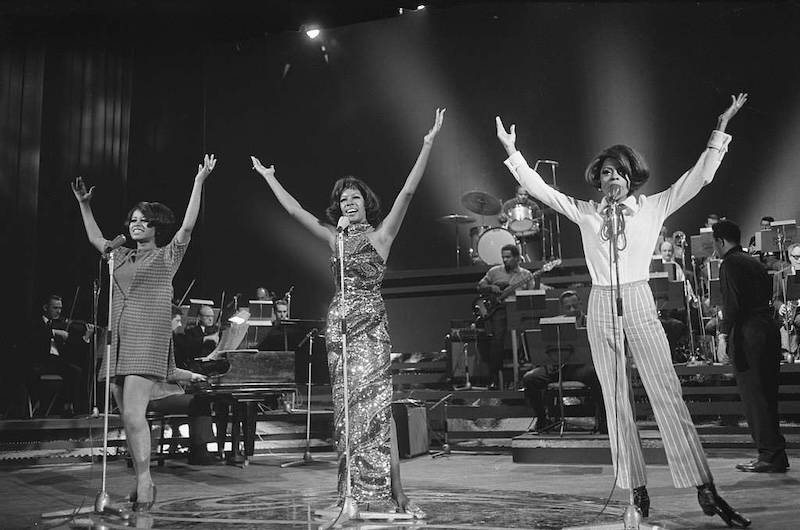
During the 1960s, Motown became one of the most influential music labels in America, producing hits from artists including Stevie Wonder, Marvin Gaye, The Supremes and The Temptations.
But while the performers became global stars, many of the Black women who helped write, arrange and produce the music remained largely unknown outside the industry.
A new article published by The Conversation argues that several women behind the scenes at Motown played a crucial role in shaping the label’s sound and success, despite receiving little recognition at the time.
The article was written by music and popular culture scholar Amy Coddington, author of the biography “It’s No Wonder: The Life and Times of Motown’s Legendary Songwriter Sylvia Moy”.
Among the figures highlighted was Janie Bradford, one of Motown’s founding members and its first female songwriter.
Bradford co-wrote “Money (That’s What I Want)” with Motown founder Berry Gordy Jr.. Released in 1959 and performed by Barrett Strong, the song became Motown’s first major hit on the R&B chart and Billboard Hot 100.
The article says Bradford’s poetry first attracted Gordy’s attention and helped launch her songwriting career.
“Her witty lyrics told stories about situations that most anyone could relate to – namely, money and love – blended with up-tempo, thumping beats,” the article explained.
Another key figure was Raynoma Gordy Singleton, described in the article as “Mother Motown”.
Singleton helped organize the company during its earliest years, established its tape library, assembled backup vocal groups and became one of the label’s first female arrangers and producers.
In her memoir, “The Untold Story: Berry, Me, and Motown,” Singleton wrote: “Producing records was where the action was controlled – and where the money was to be made.”
The article notes that women rarely received producer recognition in the male-dominated music industry of the 1960s, even when they contributed significantly to hit records.
Much of the feature focuses on songwriter and producer Sylvia Moy, who helped revive Stevie Wonder’s early career after joining Motown in the mid-1960s.
Moy co-wrote and co-produced Wonder’s hit “Uptight (Everything’s Alright)” and later contributed to songs including “I Was Made to Love Her”, “My Cherie Amour” and “With A Child’s Heart”.
She also wrote “It Takes Two” for Marvin Gaye and Kim Weston and worked on The Isley Brothers hit “This Old Heart of Mine (Is Weak For You)”.
According to the article, Moy often failed to receive full producer credit for her work, limiting recognition of her contributions and affecting future career opportunities.
“This is why her legacy was buried for so long,” the article stated.
The article also highlighted Valerie Simpson, who became Motown’s first female songwriter to receive an official producer credit in 1968 alongside her husband and songwriting partner Nickolas Ashford.
Together, the pair helped create hits including “Ain’t Nothing Like The Real Thing”, “Ain’t No Mountain High Enough” and “You’re All I Need to Get By” for Marvin Gaye and Tammi Terrell.
Simpson later became the first Black woman inducted into the Songwriters Hall of Fame in 2002. Moy became the second in 2006.
The article concludes that while female songwriters and producers still face barriers in the recording industry, the women of Motown helped pave the way for future generations.
“It is because of them that future generations of female creatives know what is possible,” the article said.
Main image: The Supremes in 1968
Leave a Reply