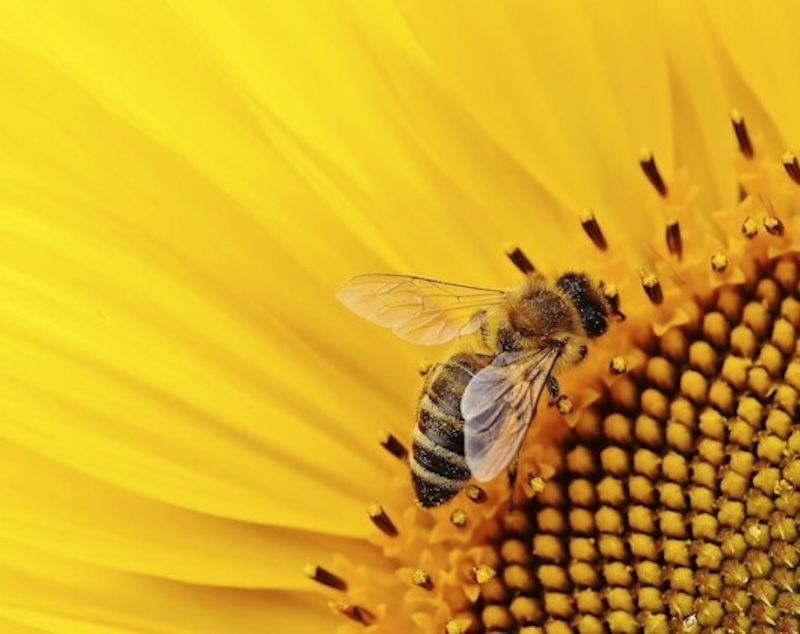
Scientists say increasingly common heatwaves could be causing serious damage to bee populations – not necessarily by killing the insects outright, but by severely harming their ability to reproduce.
New research published in the Journal of Thermal Biology found that extreme heat dramatically reduced fertility in red mason bees, an important pollinator species common in British gardens and orchards.
The analysis was discussed in an article published by The Conversation.
Fertility damage shocked researchers
Researchers recreated the intense UK heatwave of July 2022 by exposing developing bee larvae to temperatures reaching 40°C (104°F) for three days.
At first, the bees appeared to survive normally.
But months later, scientists discovered major reproductive damage after examining the insects more closely.
Male bees exposed to the heatwave experienced:
- a 50 percent drop in sperm activity; and
- roughly a one-third reduction in sperm counts.
Female bees also showed significant reductions in both the number and size of developing eggs.
“The heatwave had wrecked their fertility, especially in males,” the article stated.
Researchers say the findings suggest bee populations may be far more vulnerable to climate extremes than previously understood.
Why bees matter to food production
Bees play a crucial role in pollinating many fruits, vegetables and crops.
The article notes that solitary bees such as red mason bees help pollinate apples, cherries and oilseed rape, among other crops.
If heatwaves reduce bee fertility, the effects may not become visible immediately.
Instead, one unusually hot summer could result in far fewer bees emerging the following year – potentially reducing pollination and affecting agricultural production.
Farmers may then become increasingly dependent on commercial honeybee “hire-a-hive” systems to compensate for declining wild bee populations.
Scientists say wild bees are often more efficient pollinators than managed honeybees.
Solitary bees especially vulnerable
Unlike honeybees and bumblebees, most bee species are solitary and do not live in large social colonies capable of regulating nest temperatures.
That leaves them far more exposed to environmental stress.
Honeybees and bumblebees can cooperate to cool or warm their hives, redistribute labor and adapt collectively during extreme weather.
Solitary bees have no such support systems.
“Nests of these solitary bees are at the mercy of the elements,” the article explained.
Climate change adding to other pressures
Heatwaves are only one of many threats already facing bee populations worldwide.
Scientists say bees also struggle with:
- pesticides;
- habitat loss;
- disease;
- nutritional stress; and
- changing ecosystems linked to climate change.
Researchers are now studying whether bees’ nutritional needs also change during hotter weather and whether parent bees can adapt their behavior to help offspring survive.
The broader concern is that rising global temperatures may quietly weaken pollinator populations over time – with potentially serious consequences for food production and ecosystems.
Leave a Reply