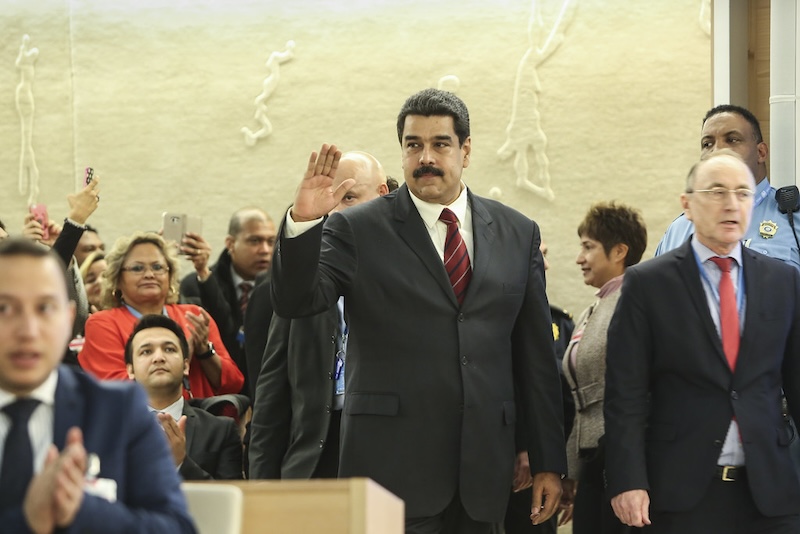
Four months after US forces captured Venezuelan president Nicolás Maduro and removed him from power, Venezuela remains caught between economic reform, political uncertainty and unresolved questions about democracy.
A new analysis published by The Conversation argues that while the country is beginning to reverse years of socialist economic policies, many of the structures that supported Maduro’s government remain firmly in place.
Following Maduro’s capture by US forces in January, Vice President Delcy Rodríguez assumed leadership of the country and has begun implementing economic reforms with support from the Trump administration.
The article says Rodríguez has focused on opening Venezuela’s economy to private investment while maintaining tight political control – an approach the analysis compares to China’s model of economic liberalization without broader democratic reform.
Under former president Hugo Chávez and later Maduro, Venezuela pursued decades of socialist policies that included nationalizations, oil wealth redistribution and expanded state control over the economy.
But Venezuela’s economy collapsed during Maduro’s presidency amid hyperinflation, sanctions, political repression and declining oil production.
Now, according to the article, Rodríguez is moving quickly to reverse many of Chávez’s economic policies.
“New laws and regulations reversing Chávez’s nationalisation drive are reopening key sectors of the economy to private investment,” the article stated.
The reforms include opening Venezuela’s oil, mining and infrastructure sectors to outside investors. Venezuela has also restarted engagement with the International Monetary Fund after years of isolation.
IMF managing director Kristalina Georgieva reportedly described her discussions with Rodríguez as “productive”.
US President Donald Trump has publicly praised Rodríguez, saying she is doing a “great job” and working well with US officials.
Despite the economic changes, however, the article argues that meaningful political reform has been limited.
The ruling United Socialist Party of Venezuela still controls the national assembly, courts, police and military, while many senior figures from Maduro’s administration remain inside government.
The article notes that key Maduro-era power brokers including Diosdado Cabello and Vladimir Padrino López continue to hold influential positions.
Meanwhile, opposition demands for new presidential elections have so far gone unanswered.
The article says progress on releasing political prisoners has also slowed after an initial wave of amnesties earlier this year.
“Venezuela remains in a political limbo with hopes of justice and democracy currently frustrated,” the article said.
The analysis also highlights growing frustration among supporters of opposition leader María Corina Machado, who many expected would play a larger role after Maduro’s removal.
Machado, who was barred from running in Venezuela’s disputed 2024 election, remains outside the country but has reportedly said she plans to return before the end of 2026.
According to the article, Trump declined to support Machado as Venezuela’s next leader despite her strong relationship with senior US officials including Secretary of State Marco Rubio.
The article concludes that Venezuela’s future remains deeply uncertain.
While the country is moving away from socialist economics and reopening to international investors, critics argue the reforms could simply restore Venezuela’s historic dependence on oil and mineral extraction without delivering long-term political stability.
“This will merely reestablish Venezuela’s historical dependence on commodity exploitation,” the article warned.
Leave a Reply