US President Donald Trump may still enjoy strong support among some European conservative movements, but political tensions in Italy suggest that backing for Trump-style politics across Europe could be more fragile than it appears.
A new analysis published by The Conversation argues that Italian Prime Minister Giorgia Meloni has begun distancing herself from Trump after initially building close ties with his political movement.
Meloni, leader of the far-right Brothers of Italy party, spent years cultivating relationships with American conservatives and became closely associated with Trump’s “Make America Great Again” movement.
The article notes that Meloni and Trump shared similar positions on immigration, national sovereignty, identity politics and opposition to what conservatives often describe as “wokeism” and globalism.
But ideological similarities have increasingly collided with political realities.
According to the article, tensions escalated after Meloni criticized Trump’s social media attack on Pope Pope Leo, who had condemned the US and Israeli war against Iran.
On April 13, Meloni described Trump’s comments as “unacceptable”, prompting Trump to accuse the Italian leader of lacking “courage”.
The article argues that deeper disagreements had already been developing beneath the surface.
While Trump has taken a confrontational position toward NATO and reduced support for Ukraine, Meloni has maintained a strongly pro-NATO stance and continued backing for Ukraine.
The analysis suggests Meloni’s position has also been shaped by domestic political pressures and Italy’s broader relationship with the European Union.
“Externally, the EU’s institutional and financial straitjacket has required Meloni to work collaboratively with the bloc,” the article stated.
The piece also points to coalition politics inside Italy, where the more centrist and pro-European Forza Italia party remains part of Meloni’s governing alliance.
Despite initially benefiting politically from her relationship with Trump, the article argues that Italy gained few concrete advantages from the alliance.
Italy still faced US trade tariffs, while Trump continued demanding NATO members increase military spending to 5 percent of GDP.
At the same time, Trump’s foreign policy decisions may now be creating political problems for Meloni at home.
The article says rising energy prices and fears linked to the Iran conflict contributed to growing public dissatisfaction in Italy, including during a recent referendum on judicial reform that became a broader test of support for Meloni’s government.
A survey cited in the article found that 79 percent of Italians now hold a negative opinion of Trump.
“The scarcity of tangible policy gains from her ties with Trump may be one reason for Meloni’s decision to distance herself from the US president,” the article said.
The analysis also suggests Meloni faced particular pressure after Trump attacked the Pope, given her longstanding efforts to present herself as a defender of Christian and Catholic values.
“Trump’s attack on the Pope – indefensible for Meloni as someone who has defined herself as a Christian and whose party draws on a vast Catholic electorate – gave the Italian prime minister the exit she needed to signal her distance from Trump’s recent actions to voters,” the article stated.
Despite the apparent split, the article argues that Meloni’s broader political agenda remains aligned with many aspects of Trump-style conservatism, particularly on immigration and cultural issues.
But the tensions in Italy may indicate that Trump’s political brand does not automatically translate into long-term support across Europe, especially when domestic economic pressures and foreign policy concerns begin affecting voters directly.
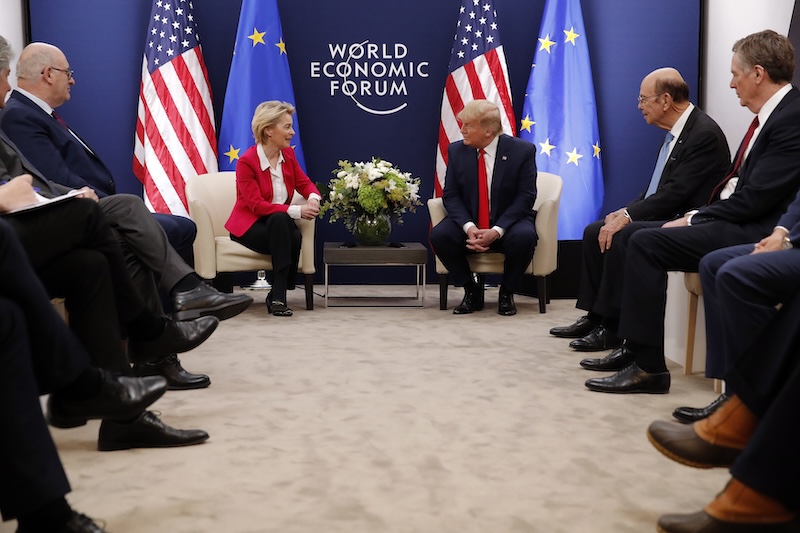
Main image: President Donald Trump with Ursula von der Leyen, President of the European Commission
Leave a Reply