The ongoing conflict involving the United States, Israel and Iran is exposing growing tensions between Washington and some of its longtime Gulf allies, as regional governments face increasing security risks tied to the presence of American military bases.
That argument is at the center of a new interview published by Analyst News featuring Khaled Abou El Fadl, a professor at the UCLA School of Law specializing in human rights and Islamic law.
In the interview, El Fadl argued that Gulf states built their security strategies around reliance on the United States, but are now facing the consequences as Iranian retaliation increasingly targets American military facilities across the region.
Recent reports have highlighted growing strain within the US-Gulf alliance following Iranian attacks on military and energy infrastructure in countries including the UAE, Bahrain and Kuwait.
When asked why Gulf countries hosting US military bases had condemned Iran rather than criticizing Washington or Israel, El Fadl responded: “This type of attitude is precisely the attitude of a thoroughly subjugated people during the colonial era.”
He argued that Gulf leaders had accepted a long-standing security arrangement in which American military protection became tied to political dependence.
“These bases were built upon the request of the United States,” El Fadl said. “And the thinking was that if Arab rulers confronted a rebellion of sorts, American forces would act as rapid-deployment or rapid-interference forces to ensure they stayed in power.”
The interview comes amid wider debate over the future of America’s alliances in the Middle East following months of conflict involving Iran, Israel and US forces. Analysts have increasingly questioned whether Gulf states remain comfortable with the risks associated with hosting American military infrastructure.
El Fadl also argued that regional governments fear criticizing the United States openly despite public frustration inside parts of the Gulf.
“I know a lot of Kuwaitis, Saudis and even Emiratis who actually absolutely resent the presence of American bases,” he said.
The interview contained a number of highly controversial claims regarding Israel, US foreign policy and Middle Eastern governments, many of which reflect El Fadl’s personal analysis and opinions rather than independently verified facts.
Among them was his argument that Arab governments risk becoming financially tied to the economic consequences of the conflict.
“This is exactly what Trump is thinking,” El Fadl said when discussing the cost of the war. “Countries like the Emirates have been basically supplying an open bank account for American and Israeli adventurism.”
The article also explored changing public attitudes inside the United States toward Israel and the wider conflict.
“There is more open criticism of Israel and a greater shift in public opinion than I’ve ever seen in the United States before,” El Fadl said.
The conflict has already raised concerns about oil markets, regional stability and the long-term reliability of US alliances in the Middle East. Reuters recently reported that Gulf states are increasingly worried about being drawn deeper into the confrontation while also questioning the extent of American security commitments.
Despite those tensions, Gulf governments have so far largely avoided publicly breaking with Washington.
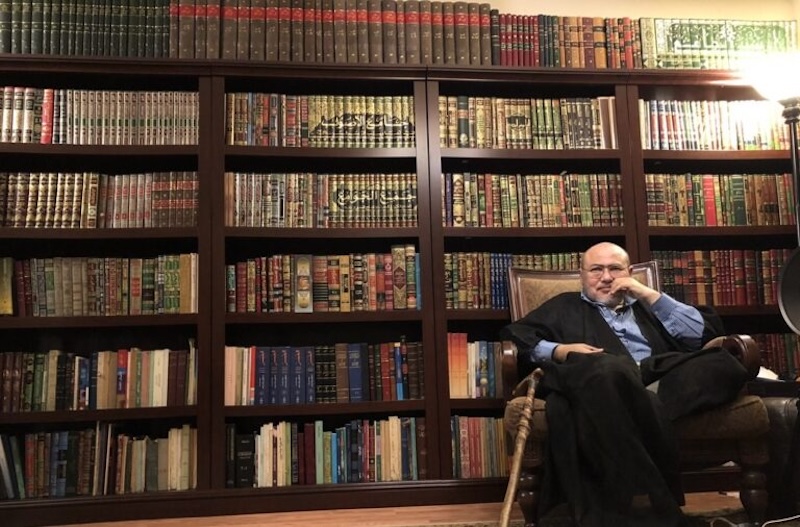
Main image: University of California law professor and Islamic scholar Khaled Abou El Fadl. Photo courtesy Usuli Institute
Leave a Reply