As governments around the world continue debating how to tackle climate change, some environmental advocates and researchers argue that Indigenous communities should play a much larger role in shaping global conservation and climate policy.
A viewpoint article published by Analyst News argues that Indigenous knowledge systems and traditional land stewardship practices are being overlooked despite their importance in protecting ecosystems and biodiversity.
The article was written by Nana Kwesi Osei Bonsu, a Ghanaian land custodian and founder of Land Rights Defenders Inc.
Writing ahead of the COP30 United Nations climate summit, Bonsu argued that Indigenous communities are often treated as symbolic participants in climate discussions rather than central decision-makers.
“This omission is not just a moral failing but a strategic misstep,” Bonsu wrote. “Indigenous peoples are not merely victims of climate change; they are frontline defenders of the Earth’s biodiversity.”
The article highlights the role Indigenous communities have historically played in preserving forests, water systems and ecosystems through traditional conservation methods developed over generations.
According to the article, Indigenous territories contain roughly 80 percent of the world’s remaining biodiversity.
From the Amazon rainforest to forest regions in Africa and North America, Indigenous-managed lands are frequently more resilient to deforestation and environmental degradation than surrounding areas, the article says.
Bonsu points to the Benimasi-Boadi community in Ghana’s Ashanti region as an example of long-standing environmental stewardship practices rooted in local traditions and ancestral knowledge.
“These are not relics of the past,” he wrote. “They are living, adaptive strategies that offer solutions to today’s environmental crises.”
The article argues that modern climate policy often emphasizes large-scale political agreements and technological solutions while paying insufficient attention to local ecological knowledge and community-led conservation.
Environmental researchers and international organizations have increasingly acknowledged the importance of Indigenous land management in recent years, particularly in efforts to slow biodiversity loss and deforestation.
The article also calls for stronger legal recognition of Indigenous land rights and greater inclusion of Indigenous representatives in international climate negotiations.
“True climate justice demands the inclusion of those most affected and most capable of driving change,” Bonsu wrote.
Among the recommendations outlined in the article are:
recognizing Indigenous land rights;
increasing funding for Indigenous-led conservation projects;
integrating traditional ecological knowledge into climate policy; and
expanding Indigenous participation in global decision-making.
Bonsu argued that Indigenous communities should not simply be consulted after policies are developed but should instead help shape climate strategies from the beginning.
“Indigenous representatives must be present at the decision-making table — not just as symbolic figures, but as equal partners shaping the future of climate policy,” he wrote.
The article also briefly references land-use disputes and environmental pressures affecting Indigenous communities in parts of Ghana, though many of those claims involve ongoing disagreements and accusations that have not been independently verified.
More broadly, the piece reflects a growing global debate over whether climate policy should rely more heavily on local knowledge and community-led conservation efforts rather than primarily top-down political agreements.
As climate concerns intensify worldwide, advocates say Indigenous environmental practices may offer lessons that modern societies are only beginning to rediscover.
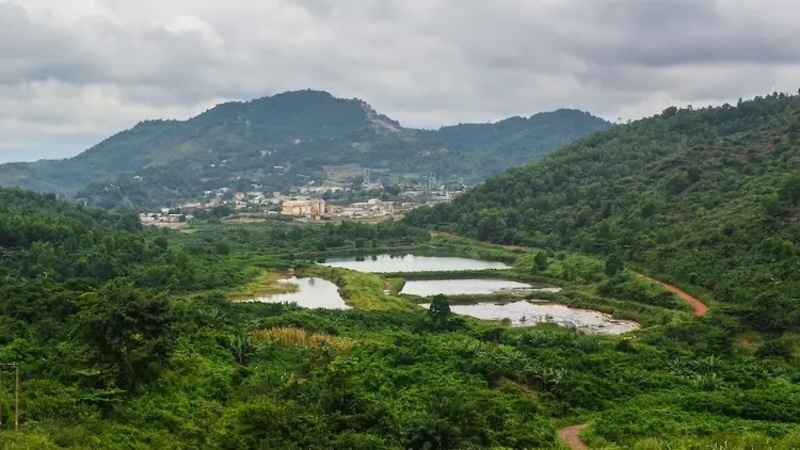
Main image: A landscape near Obuasi Amantia in the Ashanti Region of Ghana. By jbdodane / CC BY-NC 2.0
Leave a Reply