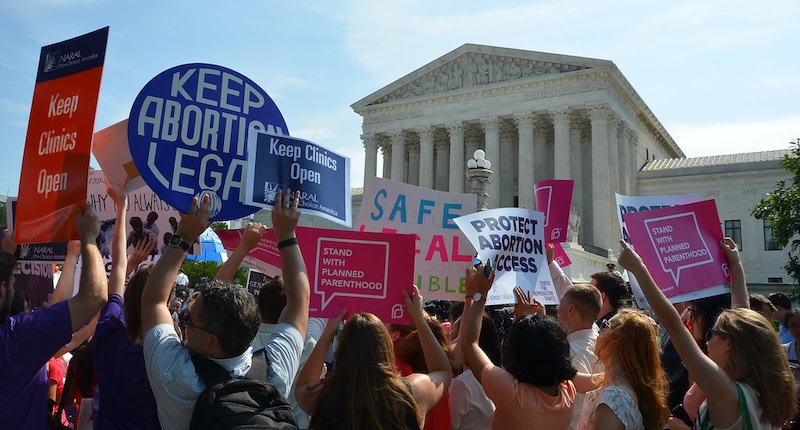
The planned resignation of Marty Makary from the US Food and Drug Administration is creating fresh uncertainty over abortion access across the United States, particularly regarding the future of abortion pills prescribed through telehealth and delivered by mail.
Makary, who faced criticism from anti-abortion groups during his tenure as FDA commissioner, is expected to leave the agency amid growing political pressure from conservative activists and internal tensions within the Trump administration.
The development matters because the FDA now sits at the center of one of the country’s most significant legal and political battles over abortion access.
The fight over abortion pills
At the heart of the dispute is mifepristone, one of two drugs commonly used in medication abortions.
The drug has become a major focus for anti-abortion organizations, particularly after the FDA allowed it to be prescribed through telehealth consultations and mailed directly to patients without an in-person visit.
Supporters of the policy say the system safely expands healthcare access, especially for women living in states with abortion restrictions or limited clinic availability.
Opponents argue the FDA moved too aggressively in loosening restrictions and say the federal government should tighten regulation of the drug.
Makary had come under increasing criticism from anti-abortion activists who believed the FDA was not moving quickly enough to reconsider access to mifepristone.
Why the FDA matters so much now
Since the Supreme Court overturned Roe v. Wade in 2022, the abortion debate has increasingly shifted away from Congress and toward courts, federal agencies and interstate legal disputes.
That has given the FDA unusual influence over abortion policy nationwide.
Even in states with abortion bans, telehealth providers operating from abortion-protective states have continued mailing abortion pills to patients elsewhere, relying on legal protections in their home states.
As a result, changes in FDA policy could potentially affect abortion access far beyond states where the procedure remains broadly legal.
The Supreme Court is also reviewing another case connected to the FDA’s approval of telehealth distribution for mifepristone, adding further uncertainty to the issue.
Missouri remains deeply involved in the legal battle
Missouri has become one of the key states involved in ongoing litigation surrounding abortion pills and FDA authority.
The state already has some of the strictest abortion laws in the country following the end of federal abortion protections under Roe v. Wade. Missouri officials have also joined broader legal efforts challenging access to mifepristone.
According to court records, Missouri, along with Idaho and Kansas, intervened in a major federal lawsuit seeking to restrict access to the abortion drug. In 2025, part of that litigation was transferred from Texas to the Eastern District of Missouri, further increasing the state’s role in the national legal fight over abortion medication.
Missouri Republican senator Josh Hawley has also been among the strongest critics of the FDA’s handling of mifepristone and previously pushed the agency to review the drug’s approval process.
Political pressure from both sides
Makary’s resignation appears tied partly to broader disagreements within the Trump administration, including disputes over vaping products and vaccine policy. But abortion politics also became a major source of pressure.
Several anti-abortion groups publicly criticized Makary for not moving more aggressively against abortion pills, particularly after the FDA approved a generic version of mifepristone last year.
Some conservative activists are now calling for a replacement willing to impose tighter federal restrictions.
At the same time, abortion-rights supporters warn that major changes to FDA policy could sharply reduce abortion access nationwide, even in states where abortion remains legal.
A debate increasingly shaped by regulation
The situation reflects how the abortion debate in America is increasingly being shaped through regulation, administrative decisions and interstate legal conflicts rather than traditional congressional legislation alone.
Telehealth medicine, online prescribing and mail delivery systems have transformed how abortion services are accessed, creating legal questions that courts and federal agencies are still struggling to resolve.
That means leadership changes inside agencies such as the FDA now carry enormous political and legal significance.
The broader national debate over abortion remains deeply divisive. But regardless of political views, the outcome of these regulatory and court battles is likely to shape healthcare access across the United States for years to come.
The story was reported in part by The 19th and draws on additional reporting from national news organizations.
Leave a Reply