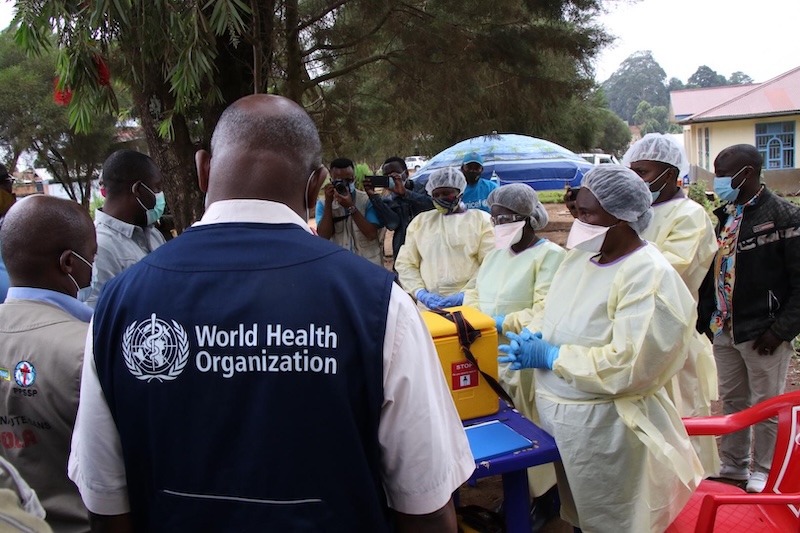
The World Health Organization has declared the latest Ebola outbreak in central Africa a “public health emergency of international concern” after cases linked to the Democratic Republic of the Congo were confirmed in neighboring Uganda.
Health officials say the outbreak involves the Bundibugyo strain of Ebola, a less well-known but still highly dangerous form of the virus.
According to analysis published by The Conversation, the declaration represents the WHO’s highest level of global health alert and is intended to mobilize international cooperation, funding and emergency response efforts.
What is Ebola?
Ebola is a severe viral disease that can cause fever, organ failure, internal bleeding and death.
The disease first emerged in central Africa in 1976 and has caused repeated outbreaks in the region since then.
The current outbreak involves the Bundibugyo strain, first identified in Uganda in 2007.
Experts say the virus can kill between 30 percent and 50 percent of infected patients, although survival rates depend heavily on access to medical treatment and the strength of local healthcare systems.
Unlike airborne diseases such as COVID-19 or influenza, Ebola spreads through direct contact with bodily fluids including blood, vomit, sweat and other secretions.
People are generally not contagious until symptoms begin.
Why this outbreak matters
The Democratic Republic of the Congo has experienced multiple Ebola outbreaks over the past several decades because of a combination of factors including dense forests, close contact between humans and wildlife, weak healthcare systems and ongoing conflict in some regions.
Scientists believe certain species of fruit bats may naturally carry the virus.
International concern increased after cases appeared in Uganda, raising fears that cross-border movement could allow the disease to spread further.
However, health experts stress that Ebola is much harder to spread globally than respiratory viruses because it requires close physical contact rather than airborne transmission.
“International spread via air travel is possible but unlikely to cause a major global outbreak,” The Conversation article noted.
No approved vaccine for this strain
While vaccines exist for the better-known Zaire strain of Ebola, there is currently no approved vaccine specifically targeting the Bundibugyo strain involved in the current outbreak.
Doctors are relying largely on supportive care, including fluids, oxygen, nutritional support and treatment of complications.
Researchers are now working to develop broader vaccines and antibody treatments capable of protecting against multiple Ebola strains simultaneously.
Health authorities, supported by the WHO and international organizations, are currently focused on identifying infected individuals, isolating patients, tracing contacts and promoting safe burial practices.
The Conversation reported that global response systems for Ebola have improved substantially over the past decade, with faster laboratory testing, better international coordination and stronger monitoring systems now in place.
Still, the outbreak serves as another reminder of how quickly infectious diseases can become international concerns in an increasingly interconnected world.
Leave a Reply