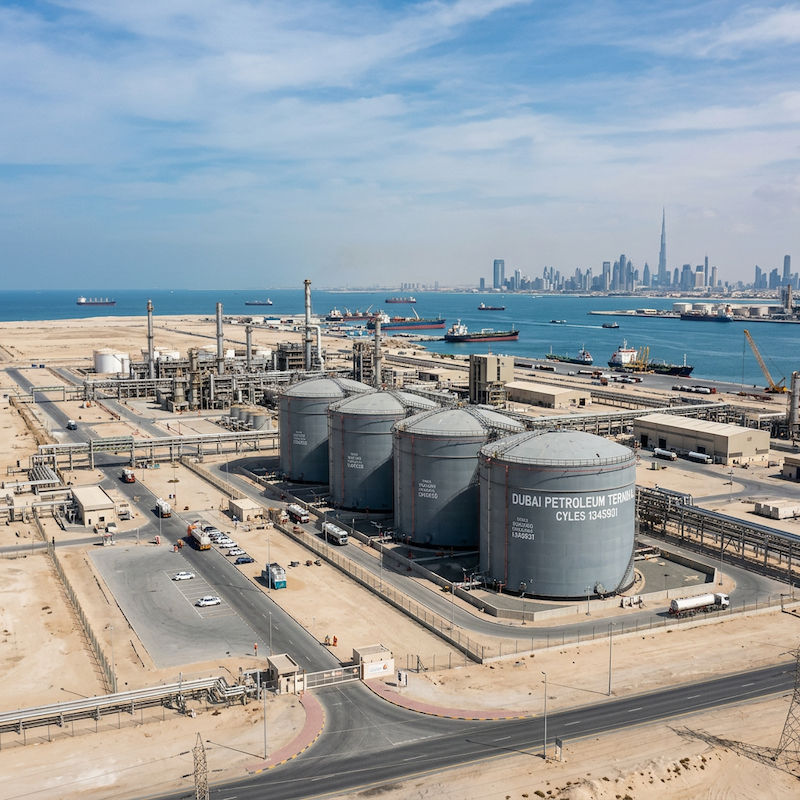
The decision by the United Arab Emirates to leave OPEC after nearly six decades may signal more than a disagreement over production quotas.
According to a new analysis published by The Conversation, the move reflects growing concern among some major oil-producing countries that the long-term future of global oil demand may be weaker than previously expected.
The UAE officially announced its departure from OPEC after 59 years amid rising geopolitical tensions, disagreements over production strategy and accelerating changes in the global energy market.
The article argues that the country’s decision reveals a widening divide between oil producers attempting to maintain high prices and those racing to sell their reserves before global demand begins to decline.
“For the UAE’s perspective, the bigger risk is not falling prices, but leaving oil in the ground that may never be sold,” the article stated.
The UAE has spent an estimated $150 billion expanding its oil production capacity to nearly 5 million barrels per day. But OPEC quota restrictions have prevented the country from fully using that capacity.
Unlike Saudi Arabia, which relies on higher oil prices to balance government spending, the UAE can reportedly sustain its budget with oil prices below $50 per barrel.
That economic flexibility has allowed Abu Dhabi to prioritize maximizing exports instead of limiting production to support prices.
The article also points to a broader shift in energy expectations.
As countries including China rapidly expand electric vehicle adoption and reduce dependence on fossil fuels, oil producers increasingly face uncertainty over how long strong global demand will continue.
The analysis suggests some governments now fear “stranded assets” – oil reserves that may eventually become less valuable or economically unviable if demand peaks.
At the same time, the UAE has pursued a more aggressive energy transition strategy than some neighboring states, maintaining a target of net-zero emissions by 2050.
The article also links the UAE’s OPEC exit to changing regional geopolitics.
Following attacks during the recent Iran conflict, senior Emirati officials reportedly became frustrated with what they viewed as weak support from regional allies.
Anwar Gargash, a senior presidential adviser, criticized the Gulf Cooperation Council’s response to the attacks, saying: “The GCC’s stance was the weakest historically, considering the nature of the attack and the threat it posed to everyone.”
The article argues that the UAE has increasingly pursued a more independent foreign policy, strengthening ties with the United States and Israel while relations with Saudi Arabia have become more strained.
The UAE’s departure also raises questions about OPEC’s future influence.
The organization once controlled more than half of global oil production but now accounts for roughly 35 percent, while internal disputes over production quotas have become more visible.
The article suggests the UAE’s exit may reflect a deeper transformation taking place across the global energy system.
“Oil producers are no longer aligned around a single strategy,” the article said. “Some are trying to manage scarcity and keep prices high. Others are racing to monetise their resources before demand peaks and they end up with stranded assets.”
While oil demand remains strong for now, the analysis concludes that the world may be entering a period in which oil gradually plays a smaller role in the global economy.
Leave a Reply