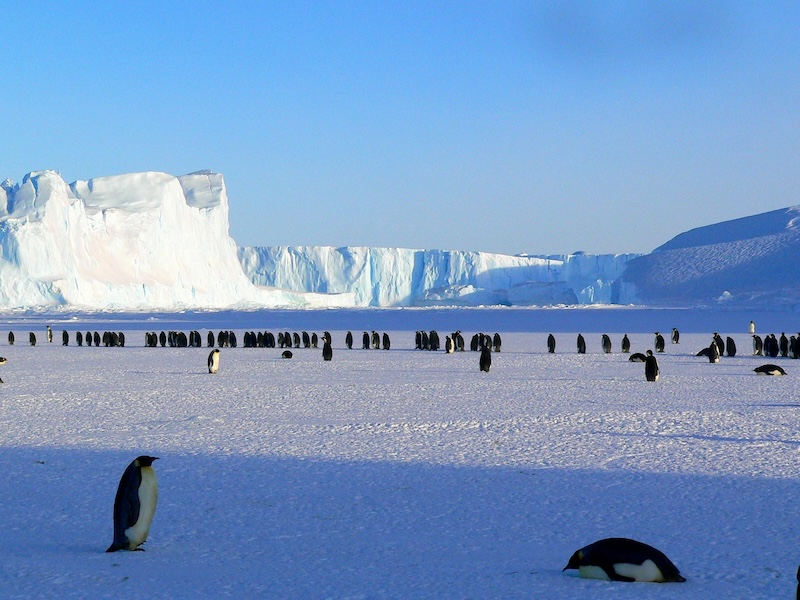
For decades, Antarctica appeared to behave differently from the rest of the warming planet.
While Arctic sea ice declined rapidly as global temperatures rose, the frozen sea surrounding Antarctica seemed surprisingly resilient. In some years, Antarctic sea ice even expanded slightly, leading scientists to believe the southern polar region might respond more slowly to climate change than other parts of the world.
But that assumption may now be breaking down.
Scientists say Antarctic sea ice has declined sharply since 2015, with recent losses occurring far faster than many climate models predicted. The sudden shift is raising concerns that important parts of the Earth’s climate system may be changing more quickly than expected.
The findings come from a new scientific study examining the Southern Ocean surrounding Antarctica, where researchers writing in The Conversation say hidden heat deep below the surface is now rising upwards and melting sea ice from underneath.
A sudden and dramatic change
For many years, Antarctic sea ice appeared relatively stable overall despite fluctuations from season to season.
That changed dramatically over the past decade.
In 2023, Antarctic winter sea ice fell to record lows, far below the long-term average recorded by satellites since the late 1970s. Scientists described the event as so extreme that the probability of it occurring naturally by chance was extraordinarily small.
The speed of the decline has become one of the most surprising developments in climate science.
Researchers had expected Antarctica to eventually lose sea ice as the planet warmed, but they believed the process would unfold much more gradually.
Instead, scientists now believe a major shift may already be under way beneath the ocean surface.
Hidden heat below the surface
According to the study, stronger winds around Antarctica over recent decades gradually pushed warmer deep ocean water closer to the surface.
For many years, a natural layering system in the Southern Ocean helped trap that heat below colder surface waters.
But researchers say that barrier weakened over time.
By around 2015, warmer and saltier water had risen close enough to the surface for storms and ocean mixing to begin drawing the heat upward, where it could melt sea ice more directly.
Scientists say this may have triggered a dangerous feedback loop.
As sea ice melts, the ocean absorbs more heat from sunlight instead of reflecting it back into space. The melting process also changes the salt content and density of surface waters, making it easier for deeper warm water to continue rising.
That cycle can then accelerate further ice loss.
Why Antarctic sea ice matters
Although Antarctica feels remote, scientists say changes there can affect the entire planet.
Sea ice plays an important role in regulating Earth’s climate. The bright ice reflects solar energy back into space, helping cool the planet. The Southern Ocean also helps store large amounts of heat and carbon deep underwater.
If Antarctic sea ice continues shrinking over the long term, the region may become less effective at slowing global warming.
The environmental consequences could also be severe for wildlife.
Antarctic ecosystems depend heavily on sea ice. Tiny algae grow beneath the ice and support krill populations, which in turn feed penguins, seals, whales and seabirds.
Recent years of unusually low sea ice have already been linked to mass deaths among emperor penguin chicks. Scientists officially classified emperor penguins as endangered earlier this year.
Scientists still face uncertainty
Researchers caution that it remains unclear whether the recent changes represent a permanent shift or part of a longer natural cycle.
Climate systems are highly complex, and Antarctica remains one of the least understood regions on Earth.
However, scientists say the rapid decline in sea ice is concerning partly because it was not fully predicted by many existing climate models.
That raises the possibility that some important climate processes may be evolving faster than expected.
For now, researchers say Antarctica may no longer be acting as the stable climate buffer it once appeared to be.
Instead, one of the coldest and most isolated parts of the planet could increasingly become a driver of global climate change itself.
Leave a Reply